

Elicit
Verified ProfileElicit is an AI research assistant for literature review, paper discovery, data extraction, evidence tables, and research reports built around academic sources.
Free
Starter Access
Plus
Individual Plan
Pro
Heavy Research
Teams
Collaboration
Last synced September 9, 2026. Official data may change on the provider website.
Visual References
Official preview, product capability, and workflow context
Overview
Elicit is an AI research assistant focused on literature review workflows: finding relevant papers, extracting structured information, comparing studies, and drafting research summaries from academic sources.
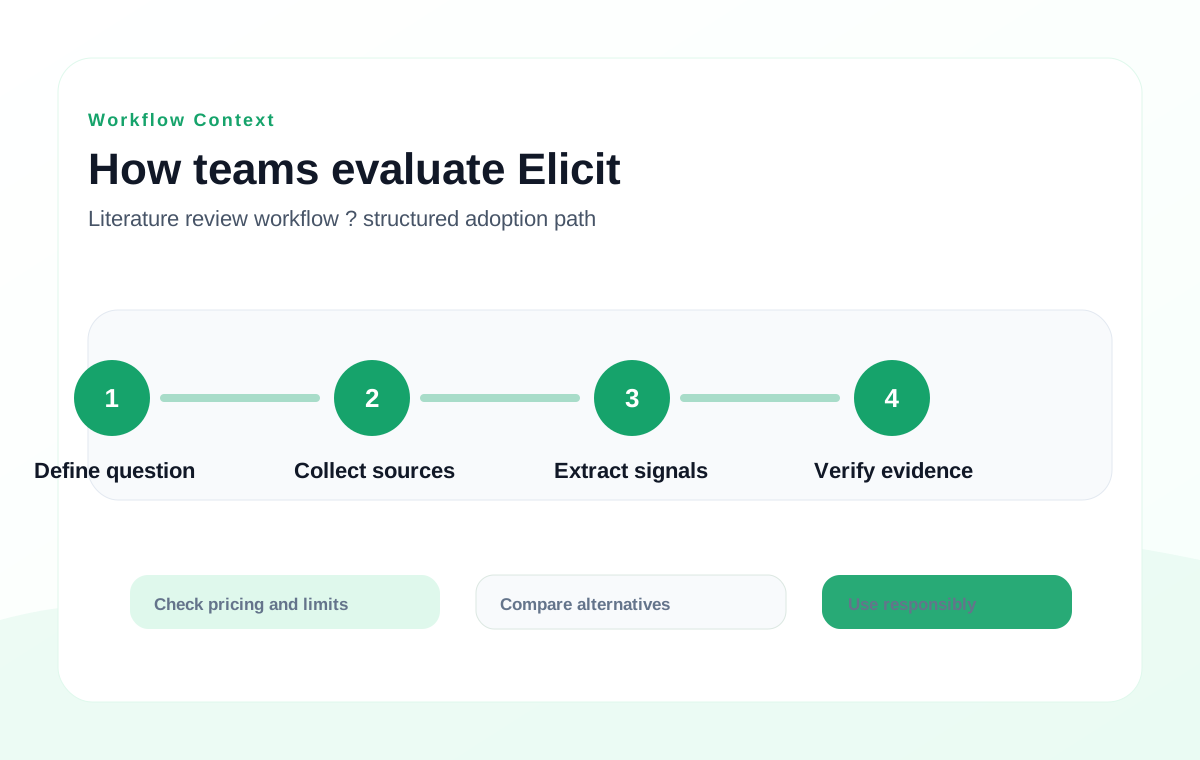
It is most useful when a user has a research question and needs to scan many papers, build evidence tables, identify themes, or extract study-level details. It should still be used with source checking because AI extraction can miss nuance or misread a paper.
This profile summarizes the tool before users continue to the official website.
Ratings & Evaluation
Directory-level scoring for comparison
User Rating
4.6/ 5
★★★★★
Editor evaluation based on literature review depth, extraction workflow, and research usability
Editor Score
4.7/ 5
Literature Review Fit95%
Evidence Extraction92%
Ease of Use88%
Pricing Clarity86%
Key Features
1
Research question search
Search academic papers around a specific research question and surface papers likely to answer it.
2
Evidence table extraction
Extract variables, methods, populations, outcomes, findings, and custom columns into structured tables.
3
Paper summaries
Generate concise paper-level summaries to speed first-pass screening and evidence review.
4
Upload and analyze PDFs
Work with uploaded papers or selected sources to build more targeted review tables and reports.
5
Research reports
Turn paper sets and extracted evidence into draft reports that can be refined by researchers.
6
Team research workflow
Paid tiers support larger usage needs, more powerful extraction, and collaboration-oriented research work.
Pros & Cons
Pros
- ✓ Strong fit for literature review, evidence mapping, and structured paper comparison
- ✓ Saves time when scanning large paper sets and extracting recurring variables
- ✓ More research-specific than general chatbots for academic source workflows
- ✓ Useful for students, researchers, analysts, and evidence-heavy content teams
Limitations
- • AI extraction still needs human verification against original papers
- • Best results require a clearly scoped research question and well-chosen columns
- • Heavy use and advanced features require paid plans
- • Not a substitute for formal systematic review methodology or domain expertise
Pricing Overview
Elicit has an official or provider-controlled pricing/product page available for current plan review. The table below records public pricing signals where they could be confirmed.
| Plan | Price Signal | Best For | Notes |
|---|---|---|---|
| Basic | Free or low-cost starter | Light literature review | Official pricing page signal |
| Plus | $7/mo billed annually | Individual research workflows | Observed official price signal |
| Pro | $29-$49/mo billed annually | Heavier evidence extraction | Observed official price signal; plan names/limits can change |
| Team | From about $169/mo | Research teams | Observed official price signal |
Pricing rechecked on June 9, 2026. Amounts, billing periods, regional taxes, credits, and plan limits should be verified on the official pricing page before purchase.
Alternatives
SS
Semantic Scholar
Free
Semantic Scholar is a free AI-powered academic search engine for discovering papers, understanding citation context, tracking authors, and accessing scholarly metadata through an API.
CO
Consensus
Freemium
Consensus is a freemium AI-powered research search tool for finding evidence-backed answers from scientific papers and quickly seeing what research literature says about a question.
SA
Scopus AI
Paid
Scopus AI is a paid AI-assisted Scopus research discovery tool for exploring Scopus-indexed literature, research themes, summaries, and trusted academic source discovery.
FAQ
What is Elicit best for?+
Elicit is best for literature review, paper discovery, screening, extracting study details, and building evidence tables from academic sources.
Does Elicit have a free plan?+
Yes. Elicit has a free Basic tier, with paid Plus, Pro, and team-oriented plans for heavier research workflows.
Can Elicit write a full research paper?+
It can help summarize and organize evidence, but researchers should write, verify, cite, and interpret findings themselves.
Is Elicit reliable enough for academic work?+
It is useful for accelerating review work, but extracted claims and summaries should be checked against the original papers before citation or publication.